
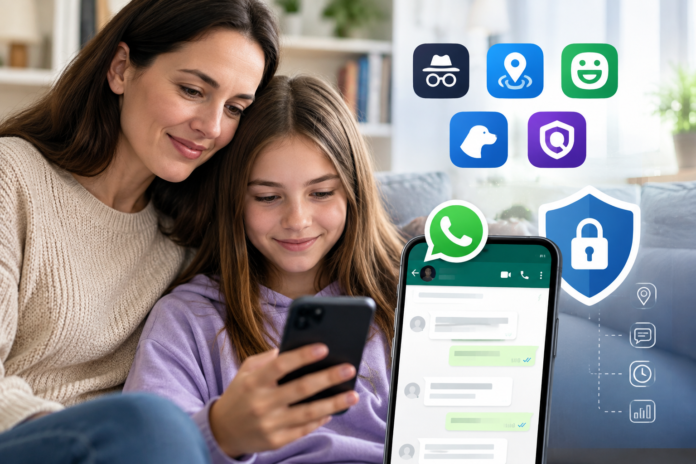
A calm family technology plan begins before anyone opens Settings. Parents first need to name the problem, decide what would count as improvement, and explain the boundary to the child. That matters especially when the goal is setting limits that protect sleep and attention while still allowing homework, creativity, communication, and downtime.
A search for daily screen time vs app limits usually begins with a symptom: a rule did not apply, a report looks wrong, or access changed unexpectedly. Do not respond by flipping every related switch. Device limits, app limits, schedules, reports, and household routines solve different problems. A focused diagnosis preserves necessary access and creates a test support can repeat.
Describe what happened without assigning blame
Write the event as a short timeline: which family devices was involved, which account was signed in, what the family expected, what appeared instead, and when the device last connected. Do not open with an accusation of bypassing the rule. Wrong accounts, unsupported paths, updates, sync delay, background activity, and classification errors can look identical.
Preserve the error text, time, and displayed identity without collecting unrelated private content. Give support the minimum technical context; keep credentials and unrelated child communications private. Stop when advice requires weaker security, concealed identity, or approval of an unknown developer; move to verified support.
Separate adjacent features
Diagnosis begins with one function, not the product category printed on a sales page. Device limits, app limits, schedules, reports, and household routines solve different problems. State precisely which capability failed and where the family expected to find it. Do not generalize a result from Chrome, Edge, Safari, or an embedded browser to the others. Inventory answers ‘what is present,’ not ‘who used it’ or ‘for how long.’ Recorded duration is not the same as attentive engagement.
Check current guidance before assuming intent
Pew Research Center, How Teens and Parents Approach Screen Time states: Forty-six percent of teens said a parent was at least sometimes distracted by a phone during conversations. Use that finding as context; it does not diagnose one child or prescribe the same answer for every household.
U.S. Surgeon General, Social Media and Youth Mental Health Advisory states: The advisory says current evidence does not allow a conclusion that social media is sufficiently safe for children and adolescents. The figure can sharpen a question, but it cannot explain one young person’s motives or set a universal family rule.
Use the facts to build possible explanations, never to skip the child’s account of events. Documentation describes intended operation and surveys summarize groups; an individual incident still needs direct verification.
Work through a safe diagnostic sequence
First, start with sleep and school commitments. Document the technical context without collecting unrelated private content.
Next, separate creation from passive scrolling. Change one variable, observe it, and restore it before expanding the setup.
Then, choose device or app-level limits. A correction process makes technical mistakes safer to report.
After that, protect essential communication. Remove or narrow a control that creates more disruption than improvement.
Before enforcement, plan weekend differences. Write down the expected response so later discussion is based on a record, not competing memories.
During the trial, decide how extra time is requested. A test under the adult login cannot establish what occurs in the supervised profile.
At the family check-in, model the same boundaries as adults. List essential uses first so a broad restriction does not disable a necessary tool.
Finally, review after seven days. State the scope, duration, and appeal route in language the child can repeat back.
Reproduce the issue with a harmless example
When the basic checks are complete, run the proposed rule for a school day and a weekend, then ask what was blocked at the wrong time. Use a reversible example and tell the young person exactly what the test covers. Compare the response once the device reconnects and completes synchronization. A disappearing error is not a complete success until essential school and safety uses pass too.
A useful test has a control case. Test an allowed school or safety path beside the blocked or reported case. The comparison reveals overreach and separates a broad device failure from one faulty feature.
Decide whether the answer is technical or relational
Not every conflict is a software failure; sometimes the boundary itself needs discussion. The answer is a conversation, not a wider technical grant. A relationship review should cover clarity, exceptions, and the continuing purpose of the rule. A technical record cannot classify every school, friendship, creative, or disability-related use correctly.
No universal number fits every child; age, school obligations, disability, sleep, family circumstances, and the quality of use matter. Escalate serious safety concerns beyond the dashboard to the appropriate professional, reporting, or emergency channel. Do not expose the family device to danger merely to satisfy curiosity about a record.
Close the loop
A responsible closeout separates confirmed cause from remaining uncertainty. A useful closeout names what changed, what the test showed, and who reviews it next. The feature and platform guide can clarify the intended capability and boundaries, but current device and account evidence should decide the case.
The practical win is clarity: what failed, what still works, and how another person can see the same response. An explainable repair is worth more than an impressive but mysterious result.
A wider evidence point
Pew Research Center reported in 2024 that 44 percent of U.S. teens at least sometimes felt anxious without their phone. The response describes a feeling reported in a survey; it does not by itself establish a disorder or justify a universal limit.
When to review the plan again
A review is also the moment to reduce supervision when the child has demonstrated skill. Ask what they now manage independently, where they still want help, and which exception keeps recurring. That conversation turns family screen-time plan into a temporary scaffold instead of a permanent judgment.
A final check should return to the original question: did this approach make setting limits that protect sleep and attention while still allowing homework, creativity, communication, and downtime easier to manage without disrupting essential access or honest conversation? If the answer is unclear, extend the observation period rather than expanding the control.
