
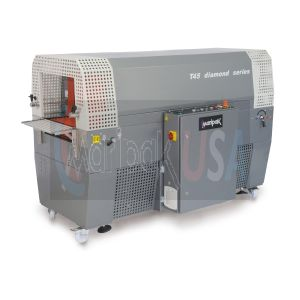
Shrink packaging uses heat-sensitive film to create a close-fitting layer around products and packaged goods. A heat tunnel is an important part of many automated shrink-wrapping systems because it applies controlled heat as products move through the packaging line. The process causes the film to contract around the product, creating a more uniform package. Understanding how these systems work can help packaging operations evaluate equipment based on product dimensions, film requirements, production speed, and the level of process control needed.
What Is a Heat Tunnel?
A heat tunnel is an enclosed packaging machine designed to apply controlled heat to shrink film. Products typically enter the tunnel after being wrapped and sealed in shrink film. As they travel through the heated chamber, the film responds to the temperature and contracts around the product.
The process depends on several variables rather than heat alone. Film type, product dimensions, conveyor speed, temperature, and tunnel configuration can all influence the final result. This is why packaging equipment needs to be matched to the specific application.
Modern tunnel systems are designed to provide controlled and consistent heating throughout the shrinking process. This helps packaging lines achieve more predictable results across repeated production cycles.
How Does the Heat-Shrinking Process Work?
The process generally begins with a product being enclosed in shrink film. A sealing machine creates the initial package before the product moves toward the heating section.
Once the package enters the tunnel, controlled heat causes the film to contract. The conveyor determines how quickly the package passes through the chamber and therefore influences its exposure time.
The goal is to create sufficient heat exposure for the film to shrink properly without applying unsuitable conditions for the material or product. Proper coordination between the sealing equipment, film, conveyor, and tunnel helps create a more consistent packaging process.
Why Temperature Control Is Important
Temperature is one of the central variables in shrink packaging. Different films have different processing characteristics, meaning a setting that works for one material may not produce the same result with another.
Consistent temperature distribution helps reduce variations during production. If heat levels are not appropriate, film may shrink unevenly or fail to conform properly around the product.
For this reason, packaging operations should consider the film specifications when establishing operating conditions. Equipment designed with temperature accuracy and control can help operators manage this part of the process more effectively.
Factors That Influence Packaging Results
Several factors determine how effectively a shrink tunnel performs.
Film Type
Shrink films are manufactured with different characteristics and thicknesses. The material selected for a particular product affects the amount of heat and processing conditions required.
Product Dimensions
The size and shape of the product influence the amount of film required and how the package moves through the heating chamber. Larger or unusually shaped products may require different equipment configurations.
Conveyor Speed
Exposure time is closely connected to conveyor speed. A package moving too quickly may receive less heat exposure, while slower movement increases the time spent inside the heated chamber.
Tunnel Design
Tunnel dimensions and configurations can vary according to production requirements. The Diamond Tunnel Series, for example, includes regular single-chamber, extended-length single-chamber, and double-chamber configurations.
Selecting the Appropriate Tunnel Configuration
Choosing equipment should begin with an understanding of the entire packaging application. Product size, film type, sealing equipment, expected throughput, and available production space all contribute to the decision.
The Diamond Series includes multiple models designed for different packaging requirements. The manufacturer’s product information notes that system estimates depend on factors such as sealer speed, product size, and film type when the tunnel is combined with suitable sealing equipment and an infeed system.
This makes it important to evaluate the tunnel as part of the broader packaging line rather than treating it as an isolated machine.
Single-Chamber and Double-Chamber Systems
Different tunnel configurations can serve different operational requirements.
A single-chamber system provides one heated passage through which products travel. Extended-length versions provide additional tunnel length, which can be relevant to particular processing requirements.
Double-chamber systems use a different configuration and can be considered when packaging operations have specific space, throughput, or process requirements. The appropriate choice depends on the product and the conditions under which the packaging line operates.
Understanding these differences before purchasing equipment can help businesses avoid selecting a system that does not align with their production requirements.
Maintaining Consistent Performance
Regular equipment maintenance can help preserve predictable packaging performance. Operators should follow the manufacturer’s recommended maintenance procedures and monitor the machine for changes in operation.
Cleaning is also important in packaging environments because film residue, dust, and other materials can accumulate around equipment components over time.
Finished packages should be checked regularly for changes such as loose film, uneven shrinkage, excessive wrinkles, or incomplete shrinking. Identifying these changes early allows operators to review factors such as temperature, conveyor speed, film selection, and equipment condition.
Integrating the Tunnel Into an Automated Line
A tunnel generally works alongside other packaging equipment rather than operating independently. A typical system may include an infeed conveyor, sealing equipment, and the heating tunnel.
Proper coordination between these components helps maintain a consistent flow of products. If the sealing machine operates at a different rate from the tunnel’s processing capacity, the overall packaging line may not perform as intended.
Therefore, equipment compatibility should be considered during system planning. The relationship between sealer speed, product dimensions, film characteristics, and tunnel performance can influence the overall efficiency of the packaging process.
Conclusion
Heat-shrink packaging relies on controlled conditions to produce consistent results. A suitable tunnel must work effectively with the selected film, product dimensions, conveyor speed, sealing equipment, and production requirements. These variables make it easier to evaluate equipment configurations and identify the features that matter for a particular packaging operation. With appropriate selection, setup, and maintenance, heat-shrink systems can support repeatable packaging processes while accommodating different products and production environments.
