
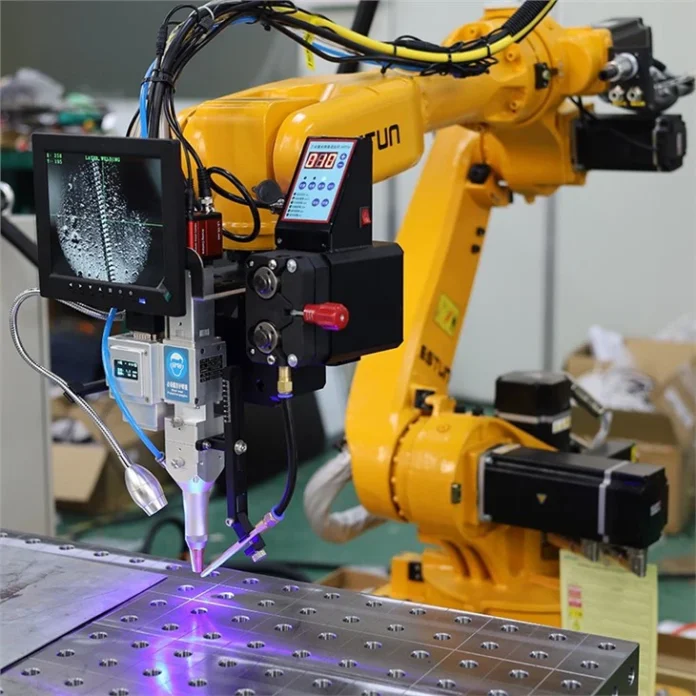
The advent of laser solution has significantly impacted a multitude of industries, ranging from healthcare and manufacturing to entertainment and telecommunications. The unique properties of lasers—such as their precision, coherence, and ability to operate across various wavelengths—have led to innovative applications and transformations in traditional practices. This article explores the evolution of laser solutions, their diverse applications, and the broader implications of their integration into various sectors.
Historical Context of Laser Solutions
The concept of lasers dates back to the early 20th century, but the practical realization of laser technology began in the 1960s.
- Theoretical Foundations: The theoretical groundwork for laser technology can be traced to Einstein’s work on the photoelectric effect and the concept of stimulated emission. These principles laid the foundation for developing devices that could emit coherent light.
- First Operational Laser: In 1960, Theodore Maiman created the first functioning laser using a ruby crystal. This milestone marked the beginning of a new era in optics, leading to the exploration of various types of lasers, including gas, semiconductor, and fiber lasers.
- Early Applications: Initially, lasers were primarily used in scientific research and military applications. As technology advanced, their potential for commercial use became apparent, leading to the development of laser solutions for various fields.
The Science Behind Laser Solutions
Understanding the science behind laser solutions is key to appreciating their applications.
- Principles of Laser Operation: Lasers operate based on the principle of stimulated emission, where an excited atom releases energy in the form of coherent light. This light is then amplified and emitted as a focused beam.
- Characteristics of Laser Light: Laser light is characterized by its monochromaticity (single wavelength), coherence (light waves are in phase), and directionality (ability to travel in a straight line). These properties enable lasers to be used in various applications requiring precision and control.
- Types of Lasers: Different types of lasers serve distinct purposes. For example, CO2 lasers are commonly used in cutting and engraving, while Nd:YAG lasers are often employed in medical and cosmetic procedures. The choice of laser type depends on the specific application and the desired outcome.
Applications of Laser Solutions Across Industries
The versatility of laser solutions has led to their adoption in numerous industries, each benefiting from the unique properties of lasers.
- Healthcare:
- Surgical Procedures: Laser solutions have transformed surgical practices, allowing for minimally invasive procedures. Lasers can precisely cut or vaporize tissue, reducing blood loss and promoting quicker recovery times. Applications include laser eye surgery, dermatological treatments, and dental procedures.
- Diagnostics: Lasers are employed in diagnostic tools such as spectrophotometers and laser scanning microscopes. These devices provide detailed insights into cellular structures, enabling early detection of diseases.
- Manufacturing:
- Cutting and Welding: Laser cutting and welding technologies have revolutionized manufacturing processes. Lasers allow for precise cuts in various materials, including metal, plastic, and wood. The ability to control the intensity and focus of the laser beam enhances the quality of the finished products.
- Marking and Engraving: Laser solutions are widely used for marking and engraving products. This application is particularly valuable in branding and traceability, as lasers can create permanent markings on surfaces without damaging the material.
- Telecommunications:
- Fiber Optic Communication: Laser solutions are essential in fiber optic communication systems. Lasers emit light signals that are transmitted through optical fibers, enabling high-speed data transfer over long distances. This technology has revolutionized telecommunications, making it faster and more reliable.
- Data Storage: Lasers are also used in optical disc technology, such as CDs, DVDs, and Blu-rays. The precision of lasers allows for high-density data storage, enabling the compact and efficient storage of large amounts of information.
- Entertainment:
- Laser Shows: The entertainment industry has embraced laser solutions for creating stunning visual displays. Laser shows, often seen at concerts and events, utilize lasers to produce captivating light patterns and effects that enhance the audience experience.
- Theatrical Productions: In theater and film, lasers are used for special effects and lighting design. Their ability to create dynamic visuals adds depth and excitement to performances.
- Scientific Research:
- Spectroscopy: Laser solutions are fundamental in spectroscopy, a technique used to analyze the composition of materials. By measuring the light emitted or absorbed by substances, researchers can gain insights into molecular structures and chemical properties.
- Atomic and Molecular Physics: Lasers play a crucial role in experiments within atomic and molecular physics. They are used to cool atoms, manipulate quantum states, and study fundamental interactions at the atomic level.
- Environmental Monitoring:
- Lidar Technology: Laser solutions are employed in Lidar (Light Detection and Ranging) technology for environmental monitoring. Lidar systems use laser pulses to measure distances and create detailed topographical maps, aiding in forestry, agriculture, and climate studies.
- Pollution Detection: Laser-based sensors are used to detect pollutants in the air and water. These sensors can provide real-time data on environmental quality, contributing to efforts to address pollution and protect ecosystems.
The Impact of Laser Solutions on Society
The integration of laser solutions into various sectors has profound implications for society.
- Increased Efficiency: The precision and speed of laser solutions have led to increased efficiency in manufacturing and medical procedures. This efficiency not only saves time and resources but also enhances productivity across industries.
- Enhanced Safety: In medical applications, the minimally invasive nature of laser surgeries has improved patient safety and reduced recovery times. Similarly, in manufacturing, the precision of laser cutting minimizes the risk of accidents associated with traditional cutting methods.
- Economic Growth: The development and adoption of laser technologies have contributed to economic growth by creating new markets and job opportunities. Industries that leverage laser solutions can innovate and remain competitive in a rapidly changing global landscape.
- Cultural Shifts: The use of laser technologies in entertainment has transformed cultural experiences. Laser shows and visual effects have become integral to modern performances, reshaping how audiences engage with art and entertainment.
- Environmental Awareness: The application of laser solutions in environmental monitoring has heightened awareness of ecological issues. By providing accurate data on pollution and climate change, these technologies support informed decision-making regarding environmental policies and practices.
Future Directions for Laser Solutions
As technology continues to advance, the potential applications of laser solutions are likely to expand further.
- Medical Innovations: Ongoing research in laser technology is expected to yield new medical applications. Innovations in laser surgery techniques and diagnostics may lead to improved treatment options for various medical conditions.
- Smart Manufacturing: The integration of laser solutions with smart manufacturing technologies, such as automation and artificial intelligence, has the potential to revolutionize production processes. This convergence may lead to more adaptive and efficient manufacturing systems.
- Sustainability Initiatives: The push for sustainability may drive the development of laser solutions that are more energy-efficient and environmentally friendly. Researchers are exploring ways to reduce the environmental impact of laser technologies while maintaining their effectiveness.
- Interdisciplinary Collaboration: The future of laser solutions may involve increased collaboration between disciplines, combining insights from physics, engineering, biology, and environmental science. This interdisciplinary approach can lead to innovative applications that address complex challenges.
Conclusion
Laser solutions have transformed a wide array of industries, driven by the unique properties and capabilities of lasers. From healthcare and manufacturing to telecommunications and entertainment, the impact of laser technology is profound and far-reaching.
As we look to the future, the potential applications of laser solutions continue to expand, fueled by ongoing research and technological advancements. The intersection of laser technology with various fields not only enhances efficiency and safety but also contributes to economic growth and cultural evolution. The journey of laser solutions reflects the remarkable interplay between science, innovation, and societal progress, showcasing how a single technological advancement can reshape our world in countless ways.
