
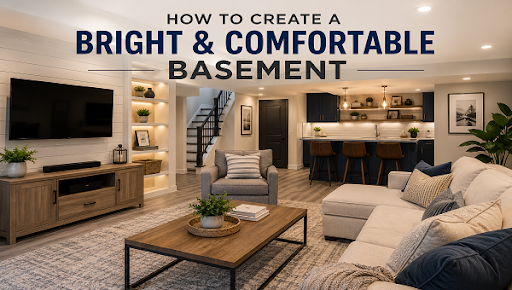
A basement should feel like a natural part of the home, not a dark room hidden below it. With the right lighting, colors, layout, flooring, and furniture, the space can become warm, bright, useful, and comfortable throughout the year. At **VCT Kitchen And Bath**, we help homeowners plan basement spaces that improve airflow, reduce clutter, and make every corner easier to use. For homeowners in Columbia, Maryland, a finished basement can provide extra space for relaxing, working, entertaining, exercising, or hosting guests. In addition, it can support a growing family by creating a playroom, home office, media room, or private guest area without changing the size of the home. When each feature works together, the basement can feel just as welcoming and practical as any room on the main floor.
Start With a Clear Basement Plan
Before choosing paint or furniture, we first look at how the basement will be used. A family may need a playroom, home office, guest bedroom, entertainment area, or workout space. Therefore, the purpose of the room should guide every design choice.
A successful modern basement remodeling project also depends on the existing layout. We check the ceiling height, window locations, support columns, stairs, plumbing, and electrical systems. As a result, we can create a design that uses the available space wisely while avoiding costly changes later.
It also helps to divide a large basement into clear zones. For example, one side can hold a television and seating area, while another section can serve as a home office. Meanwhile, an open walkway can connect each zone without making the basement feel crowded.
Key Takeaways
- Use layered lighting to brighten dark corners and create a warm atmosphere.
- Choose light colors and comfortable materials to make the basement feel larger and more welcoming.
- Control moisture and improve airflow before adding flooring, walls, furniture, or decorative features.
Add More Than One Type of Lighting
Basements often receive less natural light than rooms on the main floor. Therefore, one ceiling light usually cannot brighten the entire space. Instead, we recommend using several types of lighting together.
Use Recessed Ceiling Lights
Recessed lights work well because they sit inside the ceiling. As a result, they do not take away valuable headroom. They also spread light evenly across the room. The lights should be placed near walls, seating areas, work zones, and walkways. However, placing too many fixtures in one area can create glare. Therefore, a balanced lighting plan works better than simply adding as many lights as possible.
Add Lamps for Warmth
Floor lamps and table lamps can make the basement feel softer and more comfortable. In addition, they give homeowners more control over the mood of the room. For example, a floor lamp beside a sofa can support reading. Similarly, small table lamps can add gentle light near chairs, shelves, or side tables. These fixtures also make the basement feel more like a normal living room.
Use Task Lighting in Work Areas
Task lighting supports activities that need extra visibility. Therefore, it works well over a desk, bar, game table, craft area, or kitchenette. Under-cabinet lights can brighten countertops, while a desk lamp can improve a home office. Pendant lights may also work above a bar or game table. As a result, each part of the basement receives the right amount of light.
Install Dimmer Switches
Bright lighting helps during cleaning, working, or family activities. However, softer lighting often feels better during movies or quiet evenings. Dimmer switches make it easy to adjust the brightness. Therefore, the same basement can support many activities without needing separate rooms.
Make the Most of Natural Light
Even small basement windows can make a major difference. Therefore, windows should remain clear and free from heavy coverings. Light curtains or simple blinds allow sunlight to enter while still providing privacy. In contrast, thick curtains may block the limited natural light that reaches the room.
We also recommend placing large furniture away from windows. A tall shelf or sofa can block sunlight and make the room feel darker. Instead, lower furniture can keep the window area open. Mirrors can also reflect natural light across the basement. For example, a mirror placed across from a window can help brighten a wall that normally feels dark. However, the mirror should reflect an attractive part of the room rather than a storage area or mechanical equipment.
Choose Light and Warm Wall Colors
Paint color strongly affects how bright a basement feels. Dark colors can make a small room feel closed, especially when natural light is limited. Therefore, lighter shades usually work better. Warm white, soft cream, pale beige, light gray, and gentle greige can make walls feel open and clean. However, the color should still match the flooring, furniture, and lighting temperature.
Pure white may sometimes feel cold under bright bulbs. In contrast, a warm white can create a softer and more welcoming result. Therefore, homeowners should test paint samples under both daytime and evening lighting. An accent wall can still add character. For example, a soft blue, muted green, or warm taupe wall can bring depth without making the entire room dark. However, the strongest color should usually appear on a smaller wall.
Select Comfortable Basement Flooring
Flooring affects warmth, comfort, sound, and maintenance. Since basement floors can feel colder than upper floors, the material should support the way the room will be used.
Luxury Vinyl Flooring
Luxury vinyl works well in many basements because it offers durability and easy cleaning. In addition, it comes in many wood-look and stone-look designs.
It can support entertainment rooms, play areas, home gyms, and walkways. However, the subfloor should be dry, smooth, and properly prepared before installation.
Carpet
The carpet creates a soft and warm surface. Therefore, it can work well in bedrooms, family rooms, and movie areas. However, moisture must be controlled before carpet is installed. A damp basement can create odors and damage the material. Therefore, we always recommend addressing water or humidity problems first.
Engineered Flooring
Engineered flooring can bring the appearance of real wood into a finished basement. However, homeowners should choose a product approved for below-ground installation. The flooring system may also require a moisture barrier or special underlayment. As a result, professional installation can help protect the floor and improve long-term performance.
Add Area Rugs
Area rugs can soften hard flooring while adding color and texture. They also help define separate zones in an open basement. For example, a large rug can create a clear seating area. Meanwhile, a smaller rug can make a reading corner feel more comfortable.
Control Moisture Before Finishing the Space
A basement cannot feel comfortable if it smells damp or feels humid. Therefore, moisture control should come before decorative work. We begin by checking for leaks, water stains, wall cracks, plumbing concerns, and signs of mold. In addition, gutters and exterior drainage should direct water away from the foundation. A dehumidifier can help control indoor humidity. However, it should not replace necessary repairs. If water enters through a wall, window, or floor, the source of the problem must be fixed.
For homeowners in Columbia, Maryland, seasonal weather can also affect basement humidity. Therefore, it is important to use moisture-resistant materials and monitor the space throughout the year. Proper insulation can also reduce cold surfaces and condensation. As a result, the basement may feel warmer while using less energy.
Improve Airflow and Indoor Comfort
Good airflow helps the basement feel fresh. Without proper ventilation, the room may feel stuffy even when it looks attractive. Heating and cooling vents should serve the finished area. In addition, return-air vents may help air move more effectively through space.
Ceiling fans can also improve comfort in larger basements. However, they work best when the ceiling height allows enough clearance. Homeowners should also consider an air purifier when the basement serves as a bedroom, office, or family room. Although an air purifier does not solve moisture problems, it can reduce dust and improve the overall feel of the space.
Use an Open and Practical Layout
Too many walls can make a basement feel smaller and darker. Therefore, an open layout often works well. However, every basement does not need to become one large room. Partial walls, open shelves, furniture placement, rugs, and lighting can separate different areas without blocking the view.
For example, a sofa can divide an entertainment zone from a game area. Likewise, an open bookcase can create a small office without closing it inside a dark room. Support posts may also affect the layout. Instead of treating them as problems, we can include them in a bar, storage unit, half-wall, or decorative feature.
Keep the Ceiling Bright and Simple
The ceiling can change how tall and open the basement feels. Therefore, light colors usually create the best result. A smooth white ceiling reflects light and gives the room a clean appearance. Meanwhile, recessed lights can keep the surface simple.
In some basements, pipes and ductwork make a finished ceiling difficult. In that case, an open ceiling painted in one light color may create a modern look. However, this option should be planned carefully because exposed systems may still affect sound and comfort. Drop ceilings provide easy access to plumbing and wiring. In addition, newer ceiling tiles offer cleaner designs than older styles. Therefore, they may work well when future access matters.
Add Comfortable Furniture Without Crowding the Room
Large furniture can quickly make a basement feel tight. Therefore, homeowners should measure the room before purchasing sofas, tables, or storage units. Sectional sofas work well in some large basements. However, a smaller sofa and two chairs may offer more flexibility in a narrow room.
Furniture with exposed legs can also make the floor more visible. As a result, the room may feel lighter and less crowded. Soft fabrics, cushions, throws, and upholstered seating add warmth. Meanwhile, rounded furniture edges can make family areas safer and easier to move through.
Use Built-In Storage to Reduce Clutter
Clutter can make even a bright basement feel uncomfortable. Therefore, storage should be included in the remodeling plan. Built-in cabinets can hide toys, games, electronics, seasonal items, and household supplies. In addition, closed storage keeps the room looking calm. Storage benches provide seating while hiding items inside. Similarly, wall shelves can display books and decorations without using much floor space.
The area under the stairs can also become useful storage. Depending on the layout, it may hold drawers, cabinets, shelves, or a small reading area. Experienced basement remodeling contractors can help identify unused spaces and turn them into practical storage. As a result, homeowners can keep the main living area open and organized.
Add Warmth Through Texture and Decor
A basement may look clean but still feel cold if every surface is smooth and plain. Therefore, texture plays an important role. Wood accents can add natural warmth. For example, floating shelves, a wood television wall, or a small bar can make the room feel more inviting.
Curtains, rugs, cushions, baskets, and fabric chairs also soften the space. In addition, plants can bring fresh color to areas that receive enough light. Artwork should match the size of the wall. One large piece may work better than many small frames on a wide wall. However, a simple gallery wall can add personality near the stairs or hallway.
Create a Comfortable Entertainment Area
Many homeowners use the basement for movies, games, and family gatherings. Therefore, the entertainment area should support comfort without making the room feel dark. A television should sit away from direct window glare. In addition, seating should allow clear views without blocking walkways.
Wall-mounted televisions save floor space. Meanwhile, built-in cabinets can hide cords, game systems, and speakers. Sound control may also improve the room. Rugs, curtains, upholstered furniture, and acoustic panels can reduce echo. As a result, movies and conversations may sound clearer.
Consider a Basement Bedroom or Guest Space
A basement bedroom can provide useful living space. However, safety and building requirements must guide the design. Bedrooms may require a proper emergency exit, such as an approved egress window. In addition, the room needs suitable lighting, ventilation, heating, and access.
Light wall colors can make the bedroom feel open. Meanwhile, soft flooring, comfortable bedding, and warm lamps can create a welcoming guest space. A nearby bathroom can make the area more useful. However, adding plumbing may affect the project cost and layout. Therefore, early planning matters.
Do Not Forget the Stairway
The stairway creates the first impression of the basement. If it feels dark or narrow, the entire basement may seem less inviting. Wall lights can improve safety and brightness. In addition, a light paint color can make the stairwell feel wider.
A strong handrail, secure steps, and slip-resistant flooring are also important. Decorative wall panels, simple artwork, or a mirror can add interest without crowding the path. When possible, an open railing may allow more light to reach the stairs. However, the design must still meet safety requirements.
Final Thoughts
A bright and comfortable basement begins with good planning. Lighting, color, flooring, moisture control, airflow, storage, and furniture must work together. Therefore, homeowners should think about both appearance and daily use. We also recommend solving structural, water, electrical, and ventilation concerns before adding decorative finishes. As a result, the completed space can remain comfortable and useful for years. For families in Columbia, Maryland, a carefully finished basement can add valuable living space without changing the size of the home. With a thoughtful layout and the right materials, an unused lower level can become a bright family room, home office, guest suite, play area, or entertainment space.
