
Oil Absorbents:
Oil spills significantly threaten the environment, wildlife, and human health. Efficient containment and cleanup are crucial for mitigating their impact. Oil absorbents and oil spill products are vital in rapidly responding to oil spills on land or water.
Main Use of Oil Absorbents
Oil absorbents are designed to soak up and contain oil-based liquids while repelling water. These absorbents are essential tools in spill response and cleanup for the following reasons:
Rapid Spill Containment and Cleanup
Oil absorbents contain and absorb oil spills quickly. They are also used in emergency spill responses and routine maintenance operations. Absorbents also prevent the spread of oil, which is crucial in areas with water bodies or sensitive ecosystems.
Environmental Protection
Oil spills can severely impact the environment, contaminating soil, water, and aquatic life. Using oil absorbents effectively reduces the environmental footprint by containing the spill at its source. This is especially important in shipping, oil extraction, and refineries.
Workplace Safety
Workplace oil spills can cause slip hazards, leading to injuries and accidents. Absorbents help maintain safe working conditions by quickly soaking up spills from machinery, engines, and storage containers.
Regulatory Compliance
Environmental regulations mandate that businesses handling oil and related products have spill response plans. Oil absorbents are critical to these plans, ensuring compliance with regulations like those from the UK Environmental Agency (EA) and Health and Safety Executive (HSE).
Minimising Financial Losses
Oil spills can lead to substantial financial penalties, cleanup costs, and downtime. Using the right oil absorbents reduces the lost oil and minimises the need for extensive cleanup, saving costs.
Different Types of Oil Spill Products
Oil Absorbent Pads
- Description: Lightweight, flat, absorbent materials designed to soak up oil while repelling water.
- Material: Typically made from polypropylene or other synthetic fibres.
- Applications: Ideal for small spills, wiping surfaces, and cleaning up leaks.
Advantages:
- Easy to use and dispose of.
- Available in rolls, sheets, and pre-cutpads.
- Usage: Placed directly on the spill for quick absorption.
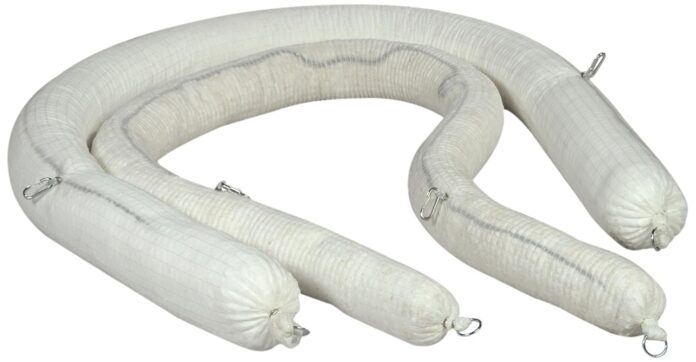
Oil Absorbent Socks and Booms
- Description: Tubular absorbents are used to prevent spills from spreading.
- Material: Often made of hydrophobic fibres that absorb oil but not water.
- Applications: Suitable for encircling spills on land and water, forming a barrier.
Advantages:
- Flexible and can wrap around equipment.
- Ideal for wet and dry environments.
- Usage: Placed around leaking machines, containers, or along shorelines.
Oil Absorbent Pillows
- Description: Compact, cushion-like absorbents used for catching drips and absorbing pooled oil.
- Material: Polypropylene fibre or cellulose filler.
- Applications: Great for under machinery, drip pans, or confined spaces.
Advantages:
- High capacity and easy placement.
- Suitable for heavy leaks and large volumes.
- Usage: Placed directly where oil tends to pool or leak.
Oil Absorbent Rolls
- Description: Long, continuous sheets can be cut to size as needed.
- Material: Typically polypropylene with perforated sections.
- Applications: Best for covering large areas, wiping surfaces, or using walkway mats.
Advantages:
- Economical and customisable.
- Excellent for spill prevention and maintenance.
- Usage: Rolled out on floors or work areas for routine oil collection.
Oil Absorbent Granules
- Description: Granular absorbents that are scattered over spills to absorb liquid.
- Material: Made from natural minerals, clay, or organic fibres.
- Applications: Suitable for outdoor spills on hard surfaces.
Advantages:
- Inexpensive and widely available.
- Suitable for non-reactive spills.
- Usage: Spread over the spill and swept up after absorption.
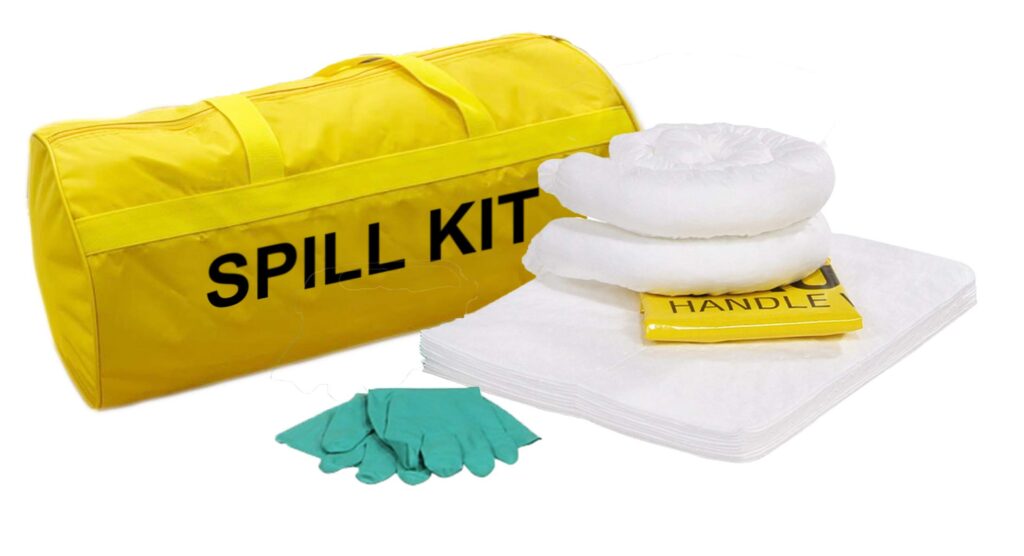
Oil Spill Kits
- Description: Pre-packaged kits containing pads, socks, booms, gloves, and disposal bags.
- Applications: Designed for emergency spill response.
Advantages:
- Ready-to-use in spill emergencies.
- Various sizes are available, from small portable kits to large industrial sets.
- Usage: Kept inaccessiblelocations and used to contain and clean spills immediately.
Choosing the Right Oil Spill Products.
When selecting oil spill products, consider the following factors:
Type of Oil:
Light oils (like gasoline) require different absorbents compared to heavy crude.
Spill Volume:
Larger spills need booms and skimmers, while small spills can be managed with pads and socks.
Environment:
Choose water-repelling absorbents for marine spills and universal absorbents for mixed environments.
Regulatory Compliance:
Use products approved by environmental and safety authorities.
Conclusion:
Oil absorbents and spill products are indispensable for managing oil spills efficiently. Their primary purpose is to contain, absorb, and clean up spills, protecting the environment and ensuring workplace safety. Each product type serves a specific function in spill response, from absorbent pads and socks to spill kits and skimmers. Businesses should invest in the right combination of absorbents and oil spill products to prepare for potential accidents and comply with safety regulations. Proper use and timely deployment can significantly reduce the impact of oil spills, safeguarding both human health and the environment.
