
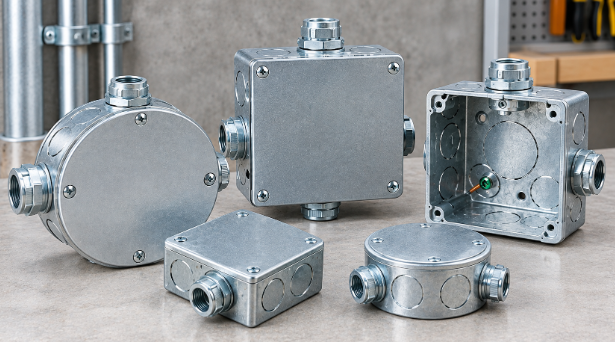
Electrical systems often require secure points where wires and cables can be connected, redirected, or distributed. An electrical junction box provides a protected enclosure for these connections, helping organise wiring while reducing exposure to environmental conditions and accidental contact.
Junction boxes are used across residential, commercial, industrial, and infrastructure applications. Their size, material, configuration, and protection level can vary depending on where they are installed and what type of electrical equipment they contain. Choosing an appropriate enclosure requires consideration of the installation environment as well as the wiring requirements.
What is an Electrical Junction Box?
An electrical junction box is an enclosure designed to house electrical wire connections and related components. It creates a defined location where conductors can be joined or routed between different sections of an electrical system.
Keeping connections inside a suitable enclosure can help protect them from physical damage, dust, moisture, and accidental contact. The box can also make wiring systems easier to inspect and maintain when access is required.
Different applications may require boxes with different dimensions, mounting arrangements, entry points, and construction materials.
Common Applications
Junction boxes can be found in numerous electrical installations. They may be used to connect circuits, distribute power, accommodate cable transitions, or provide an accessible point for wiring maintenance.
Industrial environments may require larger enclosures because they can contain multiple conductors or terminal components. Outdoor installations can introduce additional concerns, including rain, humidity, temperature changes, and exposure to contaminants.
In these situations, selecting an enclosure based on the specific operating environment is particularly important.
Materials and Construction
The material used for a junction box can influence its durability and suitability for a particular installation. Common enclosure materials include metals such as steel or aluminium, as well as various non-metallic materials.
Metal enclosures can provide mechanical strength and may be appropriate for demanding industrial applications. Non-metallic enclosures can offer advantages in environments where corrosion resistance or electrical insulation is important.
Construction quality also matters. The enclosure should be appropriately sized and robust enough for the conditions in which it will operate.
Cable Entry and Internal Space
Cable entry is an important consideration when selecting an electrical junction box. The enclosure needs suitable openings, fittings, or glands to accommodate the cables entering and leaving the box.
Adequate internal space is equally important. Conductors should not be excessively crowded, and connections should have enough room for proper installation and inspection.
Overfilling an enclosure can make maintenance more difficult and may interfere with safe wiring practices. The number and size of conductors should therefore be considered before selecting an enclosure.
Environmental Protection
The installation environment can determine what type of protection an enclosure requires. An indoor electrical installation in a clean, dry area may have different requirements from equipment installed outdoors or in an industrial facility.
Potential exposure to water, dust, chemicals, corrosive substances, impact, or extreme temperatures should all be considered. Seals, covers, cable entries, and enclosure construction can contribute to protecting internal components from these conditions.
An enclosure should always be selected according to the conditions specified for the particular installation rather than relying on appearance alone.
Accessibility and Maintenance
Electrical connections may require inspection, testing, modification, or maintenance over the life of an installation. A properly designed junction box can provide a controlled access point for these activities.
The enclosure should remain accessible where required, while its cover and fastening system should provide appropriate protection during normal operation.
Clear labelling and organised wiring can also make future maintenance more efficient and reduce the likelihood of confusion when multiple circuits are present.
Conclusion
An electrical junction box plays an important role in organising and protecting electrical connections. Understanding NEMA enclosure ratings can also help when evaluating the level of environmental protection an enclosure is designed to provide. Selecting the right enclosure requires attention to wiring capacity, materials, environmental conditions, accessibility, and installation requirements. The appropriate selection ultimately depends on the location, equipment, and conditions of the specific electrical installation.
