
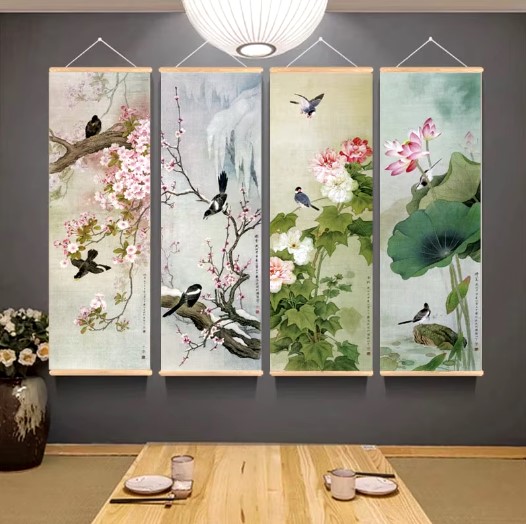
Chinese ink painting, a profound and intricate art form, embodies a rich tapestry of history, philosophy, and technique. Its roots stretch deep into Chinese culture, reflecting a unique worldview that harmonizes nature, emotion, and artistic expression. This article explores the historical context of Chinese ink painting, the philosophical concepts that inform its techniques, and the ways in which these ideas manifest in the artwork itself.
Historical Context of Chinese Ink Painting
Chinese ink painting has a long and storied history, tracing its origins back to the Tang Dynasty (618–907 CE) and flourishing significantly during the Song Dynasty (960–1279 CE). Initially, ink painting developed alongside poetry and calligraphy, reflecting the interconnectedness of these artistic disciplines.
- Early Development: The earliest examples of ink painting were primarily influenced by the desire to capture the essence of nature. Artists sought to portray landscapes, flora, and fauna using the ink wash technique, which allowed for the fluidity and spontaneity that characterize the form.
- The Song Dynasty: This period is often viewed as a golden age for Chinese ink painting. Artists like Fan Kuan and Guo Xi focused on landscape painting, emphasizing the spiritual connection between humans and nature. The use of ink wash techniques allowed for the creation of atmospheric perspectives, where the interplay of light and shadow captured the essence of landscapes.
- Ming and Qing Dynasties: The Ming (1368–1644) and Qing (1644–1912) Dynasties saw a diversification of styles and subjects in ink painting. While traditional landscape painting remained popular, artists began to explore new themes, including still life and figure painting. This era also witnessed the rise of individualistic styles, with artists like Dong Qichang advocating for personal expression and the fusion of traditional and innovative techniques.
Philosophical Concepts in Chinese Ink Painting
The techniques of Chinese ink painting are deeply informed by philosophical concepts that have shaped Chinese culture for centuries. These ideas influence not only the execution of artwork but also the way artists perceive their relationship with nature and the universe.
- Daoism and Nature: One of the most significant philosophical influences on Chinese ink painting is Daoism. This philosophy emphasizes harmony with nature and the cosmos. Artists who adhere to Daoist principles seek to reflect the natural world in their work, using ink to convey the fluidity and impermanence of life. The concept of “wu wei,” or non-action, encourages artists to allow their brushstrokes to flow naturally, capturing the essence of their subjects without forceful intervention.
- Confucianism and Moral Expression: While Daoism focuses on nature, Confucianism emphasizes moral values and social harmony. In ink painting, this is reflected through the portrayal of virtuous subjects, such as landscapes that evoke feelings of peace and tranquility. Artists often aspire to embody Confucian ideals in their work, using their art to express moral teachings and societal values. The harmonious composition of a painting can serve as a metaphor for the ideal relationships within society.
- Buddhism and Spirituality: Buddhist philosophy also plays a significant role in Chinese ink painting. The focus on meditation and mindfulness in Buddhism encourages artists to approach their work with a sense of calm and contemplation. The act of painting becomes a meditative practice, allowing artists to enter a state of deep focus. This spiritual connection is often evident in the simplicity and elegance of the brushwork, which seeks to express the underlying essence of the subject rather than merely its surface appearance.
- Yin and Yang: The concept of yin and yang, which represents the duality and balance of opposites, is intrinsic to Chinese thought and is reflected in ink painting. Artists strive for balance in their compositions, using contrasting elements such as light and dark, thick and thin lines, and detailed and abstract forms. This harmony creates a sense of wholeness in the artwork, inviting viewers to appreciate the interplay of opposites.
Techniques in Chinese Ink Painting
The techniques used in Chinese ink painting are not merely technical skills; they embody the philosophical concepts discussed above. Each brushstroke, ink wash, and composition reflects the artist’s understanding of these ideas.
- Brushwork: The brushwork in Chinese ink painting is characterized by its fluidity and expressiveness. Artists use various brush techniques to create different effects, from fine lines to bold strokes. The ability to control the brush allows artists to convey emotions and capture the essence of their subjects. This technique aligns with the Daoist principle of allowing the brush to move naturally, reflecting the spontaneity of nature.
- Ink Wash Technique: The ink wash technique is central to Chinese ink painting, enabling artists to create soft gradients and atmospheric effects. This method reflects the philosophical idea of impermanence, as each wash can evoke different moods and emotions. Artists often layer washes to build depth and complexity, allowing the viewer to experience the painting as a living entity that changes with light and perspective.
- Composition: The composition of an ink painting is carefully considered, with an emphasis on balance and harmony. Artists often employ the principles of asymmetrical balance, where different elements within the painting interact dynamically. This approach mirrors the yin and yang philosophy, creating a sense of equilibrium that resonates with viewers. The placement of empty space, or “negative space,” is equally important, as it invites contemplation and reflection.
- Subject Matter: The choice of subject matter in Chinese ink painting often reflects philosophical themes. Landscapes, flora, and fauna are common subjects, symbolizing the interconnectedness of all living things. For instance, bamboo represents resilience and flexibility, while lotus flowers symbolize purity and enlightenment. By selecting specific subjects, artists convey deeper meanings and cultural values.
- Symbolism: Symbolism plays a crucial role in Chinese ink painting. Each element within a composition can carry significant meaning, contributing to the overall narrative of the artwork. For example, the inclusion of a crane may symbolize longevity, while a pine tree can represent steadfastness. These symbols enrich the viewer’s understanding of the painting, inviting them to engage with its deeper layers of meaning.
The Role of Chinese Ink Painting in Cultural Identity
Chinese ink painting is not just an art form; it is a reflection of cultural identity and heritage. The techniques and philosophies embedded within the practice represent a profound connection to Chinese history, values, and aesthetics.
- Cultural Continuity: The practice of Chinese ink painting has been passed down through generations, preserving cultural traditions and artistic techniques. The teachings and philosophies associated with ink painting continue to influence contemporary artists, ensuring that the art form remains relevant in modern society.
- Art as a Reflection of Society: Chinese ink painting often serves as a mirror of societal values and aspirations. Artists use their work to comment on social issues, express personal experiences, and explore cultural narratives. By engaging with these themes, ink painting becomes a powerful medium for reflection and critique.
- Global Influence: The appreciation for Chinese ink painting has transcended cultural boundaries, inspiring artists around the world. The techniques and philosophies associated with this art form have been integrated into various artistic practices, fostering a global dialogue about creativity and expression. This exchange enriches the art world, allowing for a broader understanding of cultural diversity.
Contemporary Practices in Chinese Ink Painting
While rooted in tradition, Chinese ink painting continues to evolve in contemporary contexts. Modern artists are redefining the boundaries of the medium, exploring new themes and techniques.
- Innovative Techniques: Contemporary artists often experiment with unconventional materials and methods, blending traditional ink painting with modern techniques. This fusion allows for fresh interpretations of classic themes and provides new avenues for artistic expression.
- Cross-Disciplinary Collaborations: The intersection of Chinese ink painting with other art forms, such as installation art, performance, and digital media, has gained traction in recent years. Artists are exploring the possibilities of integrating ink painting into diverse contexts, challenging conventional notions of the medium.
- Global Perspectives: Modern Chinese ink painters are increasingly influenced by global art movements, incorporating diverse cultural elements into their work. This cross-pollination of ideas enriches the practice, allowing artists to create works that resonate with a broader audience.
Conclusion
Chinese ink painting is a profound art form that intertwines technique, philosophy, and cultural identity. The historical context of the medium, coupled with the philosophical concepts that inform its practice, creates a rich tapestry of meaning that resonates with both artists and viewers.
As artists continue to explore the unique qualities of Chinese ink painting, they reaffirm the significance of this tradition while pushing its boundaries. The interplay of brushwork, ink wash techniques, and symbolism not only reflects the beauty of nature but also invites contemplation of deeper philosophical themes.
In a world where artistic expression transcends cultural boundaries, Chinese ink painting remains a vital force, offering insights into the interconnectedness of life, the importance of harmony, and the enduring power of creativity. Through the lens of this ancient art form, we gain a deeper understanding of the human experience and the profound relationships we share with nature and each other.
