
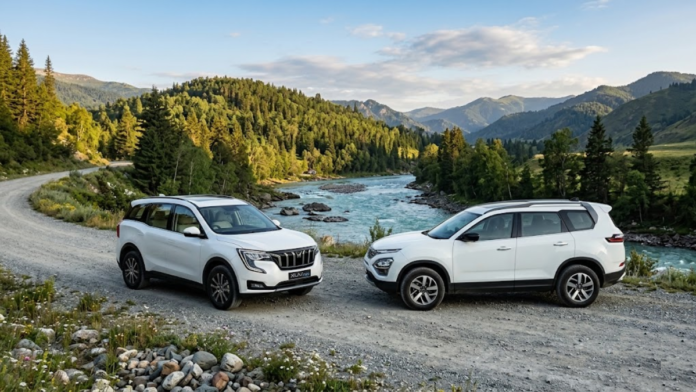
In the ever-evolving landscape of the Indian automotive industry, SUVs have emerged as the preferred choice for many consumers seeking a blend of style, space, and performance. Among the popular choices, the Tata Safari stands out as a formidable contender. With its aggressive design and impressive features, the Safari competes fiercely against models like the XUV700. In this blog, we’ll delve into the pivotal differences between the Tata Safari and its rivals, particularly focusing on the Tata Safari vs XUV700 comparison, while also considering aspects such as Tata Safari mileage.
Design & Aesthetics
The Tata Safari is built on the Omega Arc platform, which also underpins the Tata Harrier, and it showcases a powerful presence with bold lines and a robust stance. The SUV commands attention with its signature LED DRLs and aggressive front grille.
On the other hand, the XUV700, developed by Mahindra, features a more modern design language characterized by its sleek, flowing lines and a distinctive front fascia. The C-shaped LED headlights and elegantly designed tail lights contribute to a sophisticated look. While design is subjective, buyers often have a clear preference for one or the other based on aesthetics alone.
Verdict: The Safari appeals to traditional SUV enthusiasts, while the XUV700 caters to those leaning towards contemporary styling.
Interior & Comfort
When stepping inside the Tata Safari, you’re greeted by a spacious cabin designed to accommodate seven passengers comfortably. The use of premium materials, along with a well-laid-out dashboard, makes it a pleasant space for both drivers and passengers. The Safari offers features like a large touchscreen infotainment system, panoramic sunroof, and ample boot space, making long journeys a breeze.
In comparison, the XUV700 also excels in interiors, with a focus on luxury and technological advancements. The dual-display setup, which includes a fully digital instrument cluster and an expansive infotainment screen, sets it apart in terms of tech-savvy offerings. The materials used in the cabin are top-notch, giving the SUV an upscale feel.
Verdict: Both vehicles offer quality interiors, but the XUV700 leans slightly towards a more modern technological experience.
Performance & Handling
Under the hood, the Tata Safari comes with a powerful 2.0-liter turbocharged diesel engine that generates around 170 bhp and 350 Nm of torque. This engine is paired with either a 6-speed manual or a 6-speed automatic transmission. The Safari offers commendable performance across various terrains, thanks to its strong build and refined engine dynamics.
Conversely, the XUV700 boasts options for both petrol and diesel engines. The diesel variant features a 2.2-liter engine producing up to 185 bhp and 450 Nm of torque when paired with an automatic transmission. This engine performance gives the XUV700 a slight edge in terms of power output. Furthermore, the XUV700 is equipped with a sophisticated all-wheel-drive system, which enhances its handling capabilities.
Verdict: Both models deliver strong performance, but the XUV700 has the edge in raw power and traction control.
Safety Features
Safety is a key consideration for Indian SUV buyers, and both the Tata Safari and XUV700 prioritize passenger protection. The Safari is equipped with multiple airbags, ABS with EBD, stability program, and traction control. The Tata Safari has received robust safety ratings, reinforcing Tata’s commitment to vehicle safety.
The XUV700 tops this with advanced driver-assistance systems including autonomous emergency braking, adaptive cruise control, and lane-keeping assistance. Additionally, it offers a 5-star Global NCAP rating, which speaks volumes about its crashworthiness.
Verdict: While both SUVs are safe, the XUV700 edges ahead with its enhanced safety tech features.
Tata Safari Mileage
When it comes to fuel efficiency, the Tata Safari offers competitive figures. The diesel variant presents a mileage of around 18-20 km/l, depending on the driving conditions and maintenance. This efficiency makes the Tata Safari a practical option for daily commutes as well as long road trips.
In contrast, the XUV700’s diesel variant is slightly more fuel-efficient, ranging approximately between 18-21 km/l under similar conditions. Since mileage is a significant factor for many buyers, the XUV700 provides a slight advantage in this department.
Verdict: Both SUVs are efficient for their class, with the minor edge going to the XUV700.
Pricing
Pricing plays a crucial role in the decision-making process for many consumers. The tata safari mileage starts at a relatively lower base price compared to the XUV700, making it an attractive option for those looking for a feature-rich SUV without breaking the bank.
The XUV700, while offering more in terms of features and options, comes at a higher price point. However, buyers often see the value in the additional technology and safety features that justify the cost.
Verdict: The Tata Safari presents a more budget-friendly option, while the XUV700 aligns with buyers looking for advanced features at a premium price.
Conclusion
While both the Tata Safari and the XUV700 have their unique strengths, the choice ultimately depends on individual preferences. The Safari is excellent for those who appreciate a robust build and spacious interiors, while the XUV700 appeals to tech enthusiasts and individuals seeking advanced safety features.
In summary, buyers should consider aspects such as design, interiors, performance, safety features, mileage, and pricing before making their decision. Whether the Tata Safari vs XUV700 debate sways you one way or another, both SUVs are commendable choices in the crowded SUV segment, each offering something distinctive to the table.
Ultimately, test-driving both vehicles is the best way to determine which one aligns more closely with your requirements and driving style. Happy riding!
