
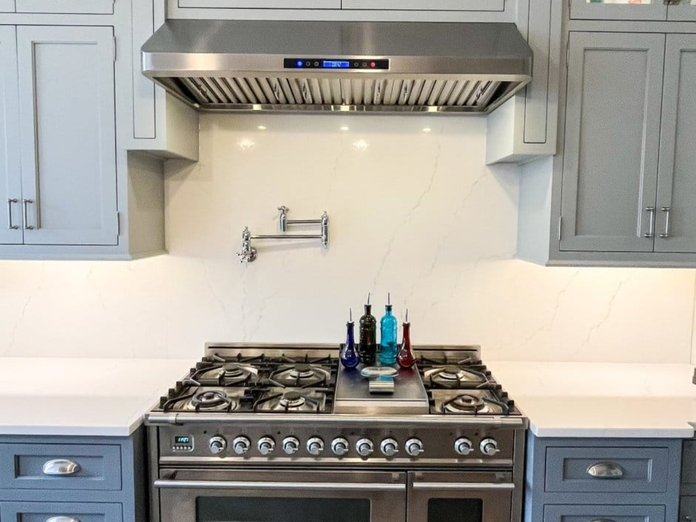
Kitchen ventilation has become an important consideration in both new and renovated kitchens. The right hood needs to provide effective capture while fitting naturally into the available space. For kitchens with limited room above the cooking surface, an under-cabinet design can be particularly practical because it installs beneath existing cabinetry rather than requiring a separate chimney structure.
An under cabinet range hood in stainless steel combines this space-conscious configuration with a durable metal finish that can complement many kitchen styles. However, appearance and size are only part of the decision. Airflow, installation clearance, ducting, filtration, maintenance, and cooking habits all influence how well a ventilation system performs.
What Is an Under-Cabinet Range Hood?
An under-cabinet range hood is installed underneath a kitchen cabinet positioned above the cooktop or range. Unlike wall-mounted chimney-style hoods, it does not require a large decorative canopy extending upward from the cooking surface.
This configuration can be useful in kitchens where cabinet storage is important or where a streamlined appearance is preferred. The hood can occupy the space immediately below the cabinet while maintaining access to the storage above it, depending on the installation design.
A stainless-steel model can also provide a neutral appearance that works with appliances and other metal fixtures throughout the kitchen.
Why Choose Stainless Steel?
Stainless steel is widely used for kitchen appliances because it combines durability with a relatively easy-to-maintain surface. It is also resistant to corrosion under normal indoor conditions.
For an under cabinet range hood in stainless steel, the material can provide a clean appearance while standing up to the heat, moisture, and airborne grease commonly associated with cooking.
However, stainless steel still requires appropriate care. Abrasive cleaning products, rough scouring pads, and unsuitable chemicals can scratch or damage the surface. Cleaning should follow the manufacturer’s recommendations for the particular finish.
How Does Hood Size Affect Performance?
Width is an important consideration when selecting ventilation equipment. Ideally, the hood should provide sufficient coverage over the cooking surface so that rising smoke and grease can be captured effectively.
Homeowners should measure the cooktop or range before selecting an under cabinet range hood in stainless steel. The available cabinet width should also be measured carefully because the hood needs to fit securely within the designated space.
Width should not be considered in isolation. Hood depth, installation height, blower capacity, and the configuration of the cooking appliance can also influence capture performance.
How Much Airflow Do You Need?
Airflow is commonly measured in cubic feet per minute, or CFM. The required capacity depends on factors such as cooking appliance type, burner output, cooking methods, and frequency of use.
Light cooking may require less ventilation than frequent frying, grilling, searing, or wok cooking. A high-output cooking surface can produce substantially more heat and airborne emissions.
The manufacturer’s airflow recommendations should therefore be considered alongside the appliance specifications. A powerful blower also needs appropriately designed ductwork to operate effectively.
The U.S. Environmental Protection Agency recommends using a range hood while cooking and venting it outdoors when possible because cooking can generate indoor particulate matter.
Ducted or Recirculating: Which Is Better?
There are two primary ventilation configurations: ducted and recirculating.
A ducted system sends captured air outside through an exhaust duct. This can remove smoke, moisture, odors, and cooking particles from the building rather than returning filtered air to the room.
A recirculating system passes air through filters before returning it indoors. This can be useful when exterior ducting is impractical, but it does not remove heat and moisture from the kitchen in the same way as an externally vented system.
When installing an under cabinet range hood in stainless steel, homeowners should determine which configuration is compatible with their kitchen before purchasing the equipment.
Why Is Installation Height Important?
The distance between the hood and cooking surface can affect capture performance and safety. If the hood is positioned too high, smoke and hot air can disperse before reaching the capture area.
Installing it too low can interfere with cooking activities and may create clearance concerns.
There is no single height suitable for every hood. The manufacturer’s installation instructions should take precedence because recommended clearances can vary according to the appliance and hood design.
Gas and electric cooking surfaces may also have different clearance requirements.
What Role Does Filtration Play?
Filters capture grease and other particles before they enter the internal components or duct system. Common designs include aluminum mesh and stainless-steel baffle filters.
The appropriate filter depends on the hood model. Regardless of the design, regular cleaning is essential. Grease-covered filters can restrict airflow and reduce ventilation effectiveness.
Households that frequently fry or cook at high temperatures may need to clean filters more often than households that mainly simmer or boil food.
A well-maintained under cabinet range hood in stainless steel can therefore perform more consistently over time.
How Should Stainless Steel Be Maintained?
Stainless steel should generally be cleaned with a soft cloth and a cleaner appropriate for stainless-steel surfaces. Wiping in the direction of the metal grain can help maintain its appearance.
Grease should not be allowed to accumulate for long periods because hardened residue can become more difficult to remove.
The hood should be switched off before cleaning, and liquids should never be sprayed directly into electrical controls, motors, or other electrical components.
Filters should be removed and cleaned separately according to the manufacturer’s instructions.
Can an Under-Cabinet Hood Work in a Small Kitchen?
One of the main advantages of an under-cabinet design is its efficient use of vertical space. Because the hood sits beneath cabinetry, it can work well in kitchens where wall space or ceiling height is limited.
However, compact kitchens still need adequate ventilation. A smaller room does not automatically mean that the lowest-capacity hood is appropriate.
Cooking habits remain an important factor. A small kitchen used for frequent high-heat cooking may require more capable ventilation than a larger kitchen used primarily for light meal preparation.
What About Chimney Adjustments?
Chimney-style ventilation systems and under-cabinet hoods have different installation configurations. Homeowners should not assume that components from one hood design can be modified to work with another.
If an existing chimney or decorative enclosure needs modification, measurements should be taken carefully before any alteration is attempted. The ventilation outlet, duct connection, cabinet dimensions, and required clearances all need to remain compatible with the hood.
Anyone researching how to resize a stainless steel chimney should first verify the manufacturer’s installation requirements and determine whether modification could affect ventilation performance or safety.
What Should You Consider Before Buying?
Before selecting a hood, measure the cooking surface and cabinet opening. Then determine whether ducted or recirculating ventilation is possible.
Next, consider airflow requirements based on the cooking appliance and cooking style. Filter type, noise level, lighting, controls, cleaning requirements, and installation height should also be evaluated.
For an under cabinet range hood in stainless steel, the finish should complement the kitchen, but functional requirements should take priority over appearance.
Conclusion
An under cabinet range hood in stainless steel can be a practical choice for kitchens that need effective ventilation without sacrificing valuable cabinet or wall space. Its performance depends on appropriate sizing, airflow, installation, filtration, ductwork, and regular maintenance. When considering how to resize a stainless steel chimney, it is important to remember that ventilation components should not be modified casually. The hood’s specifications, duct connections, clearances, and structural requirements should be reviewed before making any changes.
