
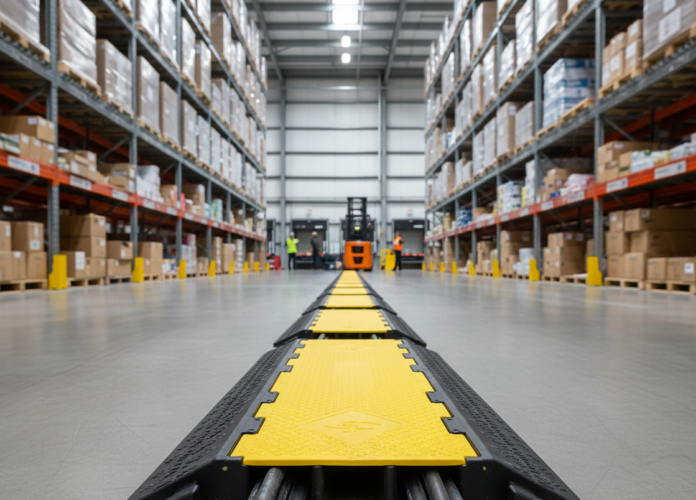
Busy job sites often have cables and hoses crossing walkways and work areas. 3 Channel Cable Protectors help cover these lines and reduce the risk of damage from traffic. They can also help reduce trip hazards around busy work zones. Safe Work Australia recommends cable protection ramps or covers where applicable.
Choosing the right protector depends on the number and size of cables involved. These channel cable protectors provide separate channels for multiple lines on suitable sites. However, channel count alone does not determine suitability. Channel size, load rating and site conditions also matter.
How Cable Protectors Protect Site Cables
Cable protectors cover exposed cables and hoses across work areas. They help shield lines from vehicles, machinery and regular foot traffic. They can also provide a safer crossing point for workers and equipment. However, protectors should form part of wider site risk controls. Workers should also inspect cables and remove damaged electrical leads from use.
Why Cable Protector Channel Count Matters
Channel count shows how many separate lines a protector can hold. The correct number helps avoid forcing several cables into unsuitable spaces.
When selecting a protector, consider these factors:
- Number of cables: Count every cable and hose needing protection.
- Cable diameter: Check each line against the channel dimensions.
- Channel separation: Keep different lines in suitable channels where possible.
- Available space: Avoid forcing several lines into one channel.
- Load rating: Check the rating against expected pedestrian and vehicle traffic.
Channel count should therefore match the site’s actual cable requirements. It should not be the only factor used when choosing a protector.
Choosing the Right Channel Count for Your Site
Start by counting all cables and hoses crossing the work area. Check their diameter, location and expected movement before selecting equipment.
Consider these points:
- Count all cables and hoses requiring protection.
- Measure their diameter before selecting the protector.
- Check whether vehicles or powered mobile plant will cross it.
- Review the expected load and traffic frequency.
- Consider the available installation space.
- Check the manufacturer’s specifications before use.
These checks help ensure the protector suits the work area and its expected conditions.
Heavy-Duty Cable Protection for Busy Job Sites
Busy areas need suitable protection against repeated vehicle movement. A Heavy Duty Cable & Hose Bridge can suit areas where heavy machinery crosses protected lines. Always check the manufacturer’s load rating and installation requirements. The bridge must suit the traffic and cables being protected. Safe Work Australia also identifies powered mobile plant as a factor when managing construction risks.
Benefits of Choosing the Correct Channel Count
The right channel count can improve cable protection and reduce clutter around busy work areas. It can also make cable management easier for workers.
Key benefits include:
- Reduced risk of mechanical damage.
- Better separation between cables and hoses.
- Fewer exposed lines across walking areas.
- Easier access for inspections.
- Better cable management around machinery.
- Safer crossing points when correctly selected.
A Heavy Duty Cable & Hose Bridge can provide added protection where suitable vehicles cross exposed cables. Correct placement also helps keep cables inside their intended channels.
Conclusion
Channel count should match the number and size of cables or hoses on site. The right choice improves protection and reduces unnecessary cable clutter. Consider cable quantity, channel dimensions, load requirements and traffic conditions. Always follow the manufacturer’s instructions and relevant Australian workplace safety requirements.
